
Bullying
Information on Bullying
Bullying is NO JOKE
Studies show that persistent bullying is associated with symptoms of Mental Health challenges like Anxiety and Depression. This is especially true for young people many of whom navigate the Psychological challenges of bullying long after the bullying has ended.
Bullying is a form of “aggressive behavior” in which someone intentionally and repeatedly causes another person injury or discomfort. Bullying is the use of force, coercion, hurtful teasing or threat, to abuse, aggressively dominate or intimidate. The behavior is often repeated and habitual. One essential prerequisite is the perception (by the bully or by others) of an imbalance of physical or social power.
Bullying can take the form of physical contact, words, or more subtle actions. The bullied individual typically has trouble defending him or herself and does nothing to “cause” the bullying. Bullying can be done individually or by a group, called mobbing, in which the bully may have one or more followers who are willing to assist the primary bully or who reinforce the bully by providing positive feedback such as laughing.
Cyberbullying is verbally threatening or harassing behavior conducted through such electronic technology as cell phones, email, social media, or text messaging.
Bullying is divided into four basic types of abuse:
Psychological (sometimes called emotional or relational), verbal, physical, and cyber, though an encounter can fall into multiple of these categories.
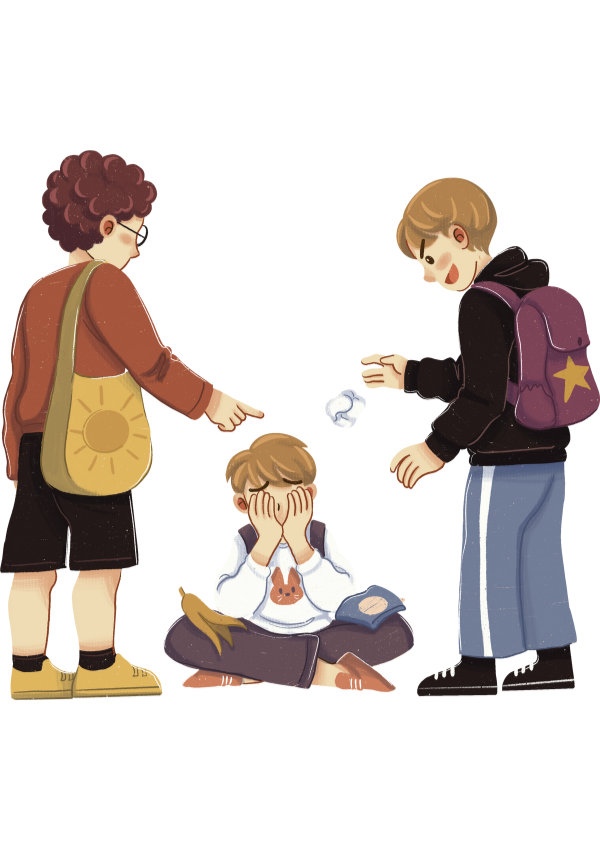
Signs of Bullying
- Injuries they can’t explain.
- Changes in eating and sleeping.
- Faking illness or claiming to feel sick.
- Headaches and stomachaches.
- Avoiding social situations, including those with people who were once their friends.
- Decreased self-esteem.
- Self-harm or other dangerous behavior.
- Losing possessions.
- Worsening academic performance
People who are bullying others may show any of these signs:
- Getting into fights.
- Becoming more aggressive at school.
- Having friends who bully.
- Getting into more fights at school.
- Show concern about their reputation and popularity.
Students ages (12-18)
Statistics on Bullying of Children:
%
reported being the subject of rumors
%
reported being excluded from activities on purpose
%
reported others tried to make them do things they did not want to do
%
reported being pushed, shoved, tripped or spit on
%
reported being threatened with harm
%
reported being made fun of, called names, or insulted
%
Reported their property was destroyed by others on purpose
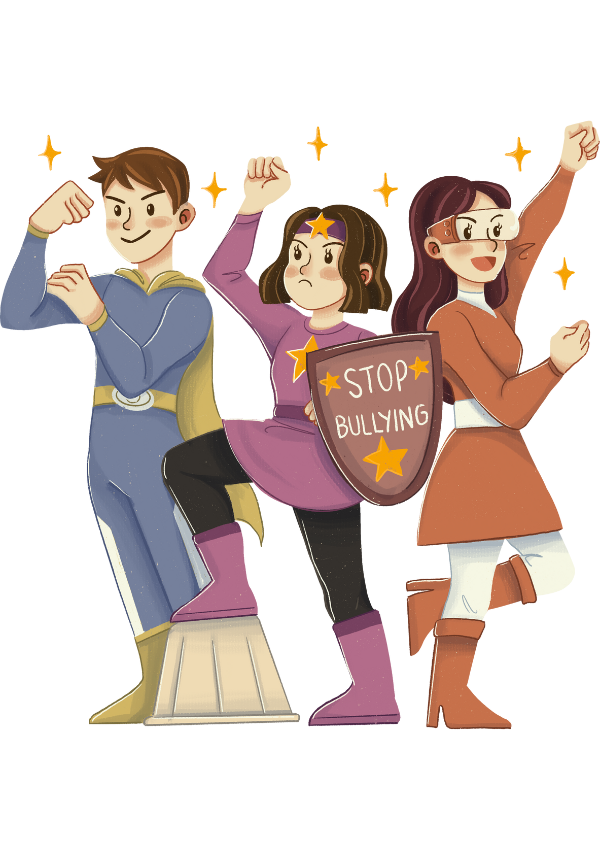
Help Stop Bullying
Don’t Be A Bystander
You can help stop bullying in your community by helping victims find safety. Tell bullies their behavior is hurtful and unacceptable, and refer to your community resources.
Bullying Suicide:
There is a relationship between bullying and suicide. People who experience bullying may experience anxiety and depression, increasing their risk of feeling suicidal.
There is a lot of research and awareness about bullying, If you are experiencing any forms of bullying please seek help from an adult, school personnel, teacher, principle or enlist help from your parents anyone who can help and assist you in stopping being “Bullied.”
A few ways to beat Bullying:
- Tell a teacher or an adult you feel comfortable with.
- Reduce bullying by removing labels and addressing behavior.
- Reduce bullying by setting Clear, Enforceable Rules and Expectations.
- Reduce bullying by Rewarding Positive Behavior.
- Encouraging Open Communication.
- Reduce bullying by looking for warning signs.
- Reduce bullying by Clearing the Scene when Bullying Occurs.
- Reduce bullying by Monitoring Hot Spots.
- Reduce bullying by Knowing your State Laws and District Policies.
- Reduce bullying by Engaging Parents.
Bullied Students reported that Bullying occurred in the following places:
- Hallway or stairwell at school (43%).
- Inside classroom (42%).
- In the cafeteria (27%).
- Outside on school grounds (22%).
- Online or by text (15%).
- Bathroom or locker room (12%).
- School bus (8%).
PACER’s
National Bullying Prevention Center
Founded in 2006, PACER’s National Bullying Prevention Center actively leads social change to prevent childhood bullying, so that all youth are safe and supported in their schools, communities and online.
National Bullying Prevention Center
National Office 8161 Normandale Blvd.
Minneapolis, MN 55437
Los Angeles Area Office
80 E. Hillcrest Dr.
2031 Thousand Oaks CA. 91360
Children Books About Bullying
Bullying does not just occur at school, on the playground, bullying occurs in the home, it happens in the workplace, between friends, even people that you just met. Bullying is a World Wide Epidemic.

Sergio
Sergio is about a Bunny Rabbit, whose father lives in constant fear for his son’s safety that he spends long grueling hours teaching him survival skills, from the dangers that a small bunny would encounter in his day.

Polly
Polly whose features are so distinct and unusual it brings about jealousy that makes her an outcast snubbed by her peers.

Rufus
Rufus is a pampered dog who is the family pet. He also lives on the family farm with many other animals. He is self-centered and preoccupied with himself.